Just Girl That Loves Books
A Practical Embroidery Designer’s Review for Small Business Merch
As an embroidery designer who’s digitized and stitched thousands of commercial projects—from café aprons to boutique tote bags—I approached Just Girl That Loves Books with a dual lens: artistic appeal *and* real-world business function. This isn’t just another whimsical motif—it’s a potential brand anchor for schools, indie bookshops, creative studios, literacy nonprofits, and small-batch makers. Let’s break down how it performs where it counts: on fabric, on people, and in the marketplace.
First Impression: Playful, Approachable, and Professionally Whimsical
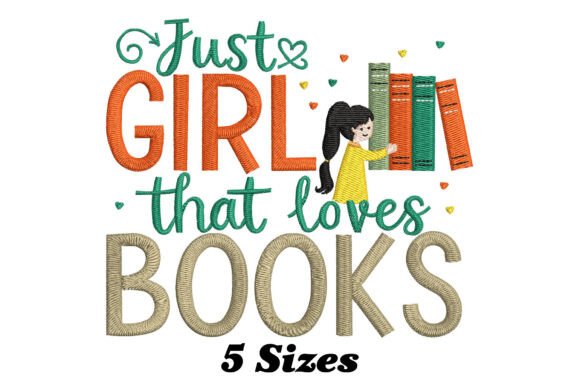
The title alone signals warmth and specificity—Just Girl That Loves Books avoids generic cuteness. It feels handmade but intentional, friendly without sacrificing polish. Based on the description—“a dash of charm,” “playful and whimsical”—this machine embroidery design leans into light-hearted storytelling, not childish clutter. That’s critical for small business merch: customers respond to authenticity, not sterility. For a school library volunteer group or a local bookstore’s staff uniforms, this tone builds instant rapport. It says, “We love what we do—and we invite you in.”
Where It Shines in Commercial Use
- Embroidered patches: Ideal for sew-on or iron-on application on denim jackets, canvas totes, or backpacks. Its balanced composition (likely centered text + subtle illustrative element) holds up well at 2.5"–3.5" sizes—common for boutique merchandise and Etsy branding.
- Apron embroidery: Perfect as a chest accent for cafés, bakeries, or craft studios. The phrase reads clearly at 3" wide, and its rhythm fits naturally above a pocket or along a bib seam.
- Cap embroidery: Works cleanly on structured front panels—especially if the design includes clean letterforms and moderate spacing. Avoid overly tight kerning; test readability at 2" width before bulk production.
- Tote bag design & custom apparel: Scales beautifully to 4"–5" on cotton canvas or twill. Paired with neutral thread colors (navy, charcoal, burgundy), it elevates handmade product presentation without shouting.
- Product packaging accents: A small version stitched onto fabric tags, gift wrap bands, or reusable pouches adds tactile brand consistency—especially for subscription boxes or literary-themed gift sets.
Where to Use It Thoughtfully
Even charming designs have boundaries. As a working embroidery designer, I advise caution with Just Girl That Loves Books in these scenarios:
- Small patch sizes under 2": Fine details—like delicate serifs or thin connecting lines—may vanish. Always run a black-and-white test stitch to verify legibility.
- Curved surfaces (e.g., cap bills or curved tote handles): High stitch density in tight curves can cause puckering. Confirm stabilizer choice—cutaway works best for caps; tear-away suffices for flat tote fronts.
- Textured or dark fabrics: On burlap, corduroy, or navy twill, contrast matters. Light thread (ecru, soft pink, mint) may fade; opt for high-contrast options like white, gold metallic, or deep teal.
- Frequent-wash items (staff uniforms, kids’ wear): Ensure the embroidery file uses secure underlay and satin-stitched edges—not just fill stitches—to prevent fraying over time.
Brand Identity Impact: More Than Just Cute
For small businesses, every embroidered detail shapes perception. Just Girl That Loves Books strengthens brand identity by signaling niche alignment—literacy, creativity, community, calm focus. It doesn’t scream “sale” or “discount”; it whispers “we understand your values.” That builds customer trust faster than a generic logo. On an apron at a children’s bookstore, it reassures parents. On a tote sold at a teacher appreciation fair, it reinforces professionalism *and* personality. Visually, it pairs seamlessly with hand-drawn typography, muted palettes, or natural fiber textures—making it easy to maintain visual consistency across digital mockups, printed hang tags, and finished product.
Designer Notes You Can’t Skip
Before stitching Just Girl That Loves Books into client work or your own inventory, follow these field-tested steps:
- Test in black and white first: Eliminates color bias and reveals spacing issues, overlapping elements, or weak outlines.
- Check scalability: Resize the embroidery file to your target dimensions (e.g., 2.75" wide for cap fronts) and verify all letters remain distinct.
- Review thread color contrast: Print a physical swatch on your actual fabric—or use a printable mockup—to assess visibility and tone.
- Inspect spacing and kerning: Tight lettering looks cramped on fabric. Ensure breathing room between “Just,” “Girl,” and “Books”—especially at smaller sizes.
- Confirm hoop size compatibility: Does the design fit comfortably within your most-used hoops? Oversized files increase hooping time and risk misalignment.
- Test on real fabric: Run a sample on your intended material—cotton poplin behaves differently than terry cloth or canvas.
- Use proper stabilizer: Lightweight fabrics need more support; dense designs need firmer backing. Don’t skip this step—it’s the difference between crisp results and puckered disappointment.
- Create a client-approved mockup: Show how Just Girl That Loves Books looks on their actual garment or patch substrate—not just a generic template.
- Compare beside other design assets: Does it harmonize with your existing logo, font system, or color palette? Consistency multiplies recognition.
- Confirm commercial licensing: Since this is categorized under School and Embroidery, verify the digital embroidery file permits small business merch, branded patch use, and resale—especially for Etsy sellers and craft businesses.
Final Thought: Charm With Purpose
Just Girl That Loves Books isn’t filler—it’s functional charm. When applied intentionally—as a chest logo on a librarian’s uniform, a sleeve detail on a teacher’s shirt, or a signature mark on a handmade journal cover—it transforms everyday items into brand moments. For embroidery shops and small business owners alike, that’s ROI you can feel: in sturdier stitches, stronger recognition, and customers who remember not just what you sell—but why it matters.