Botanical Journal
First Impressions: A Thoughtful, Textured Whisper
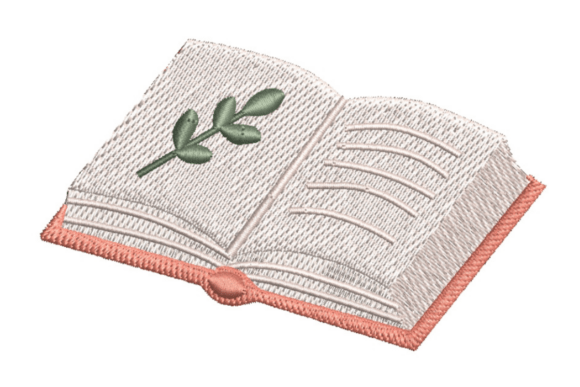
As an embroidery designer who’s stitched over 300 boutique apparel projects—from linen tees to heavyweight French terry hoodies—I opened Botanical Journal expecting charm. What I found was more: a quiet confidence in its composition. The open book motif isn’t literal or cartoonish—it’s stylized with soft curvature, gentle spine contour, and subtle page curl at the edges. Those “delicate leaf details” aren’t afterthoughts; they’re integrated like botanical sketches pressed into margins—slightly asymmetrical, lightly overlapping, with fine stem lines that suggest movement rather than rigidity. This isn’t bold lettering or dense fillwork. It’s a machine embroidery design built for breathability and tactility—ideal for small shop product differentiation in a sea of generic florals.
How Botanical Journal Lives on Real Sweatshirts
On a natural heather grey sweatshirt? Instant warmth. The design reads as hand-drawn, not digitized—especially when stitched in matte cotton thread. On charcoal or navy fabric, it gains quiet sophistication; the leaf veins catch light differently depending on stitch direction, giving depth without glare. Pastel lavender or oatmeal hoodies soften it further—leaning into cottagecore without tipping into saccharine. And yes—it scales beautifully: centered on a chest placement (standard hoodie design zone), it holds presence without overwhelming. As a sleeve accent? Trimmed to 2.5" wide, it becomes a refined detail—ideal for matching sets or seasonal capsule collections. For back designs? Paired with a minimalist quote or monogram, Botanical Journal anchors the composition with organic rhythm.
Design Personality: Feminine, Not Frilly — Rustic, Not Rough
This isn’t a “cute” design in the glitter-and-hearts sense. It’s feminine through restraint—curves over angles, negative space over saturation, suggestion over statement. It’s rustic because of its implied texture—the slight irregularity in leaf outlines mimics hand-inked journaling—but never feels unfinished. It’s not minimal, but it *is* intentional. That balance makes it unusually versatile for a school-adjacent niche: think teacher appreciation drops, library fundraiser hoodies, or creative writing club merch where intellect and tenderness coexist. It avoids childishness while staying approachable—no small feat for a machine embroidery design rooted in literary themes.
Practical Designer Notes: Thread, Stitch, and Stability
Thread color contrast is critical here. On dark fabric, a warm ecru or oat thread lifts the book shape without harshness—avoid stark white unless you want high-contrast graphic impact. On light fabric, deep forest green or muted sage for leaves adds tonal richness while keeping readability. Stitch density feels moderate—not so low it risks gapping on stretchy fleece, not so high it stiffens the fabric. That’s essential for sweatshirt embroidery, where drape matters as much as detail. You’ll likely need medium-weight cutaway stabilizer for structure, especially on lower-loft fabrics—but skip heavy tear-away; it won’t support those delicate leaf stems cleanly. Hoop size? Likely under 4x4", making it friendly for smaller commercial hoops and home machines alike. Always test on scrap first—fabric texture changes everything. A plush loopback sweatshirt swallows fine lines; a smoother poly-blend renders them crisply.
Commercial Readiness & Brand Impact
Botanical Journal earns its place in a boutique brand’s lineup because it signals intentionality—not just decoration. Customers scrolling Etsy or Instagram don’t just buy a hoodie; they buy alignment with identity: “I’m thoughtful. I collect moments. I value quiet creativity.” That resonance builds trust faster than any discount. Visually, it stands out in mockup previews—its organic flow breaks up grid-based listings. In lifestyle photography, it layers effortlessly with dried florals, ceramic mugs, or stacked notebooks. As a digital embroidery file, it pairs naturally with complementary assets: a simple monogram, a tiny ink-blot icon, or even a coordinating border for tote bags. That cross-product synergy strengthens brand recognition across your shop—and makes repeat buyers feel seen.
Washing, Wear, and Long-Term Value
Durability hinges on execution—but the design itself supports longevity. No ultra-thin satin stitches prone to fraying. No dense fill zones that crack after three washes. The open book’s outline uses smooth satin stitch with slight tapering at turns—reducing thread stress points. Leaf details rely on graceful stem stitches and sparse fill, letting fabric move beneath them. When stabilized and stitched correctly, this holds up to cold gentle cycles and air drying—key for handmade product credibility. Buyers notice that. They photograph their worn-in hoodies months later and tag you—not because it’s flashy, but because it *endures* with grace. That kind of quiet reliability compounds perceived value far beyond the base price point.
Final Thoughts for the Small Shop Creator
If you’re an Etsy seller, embroidery shop owner, or custom apparel decorator building a distinct voice—not just volume—Botanical Journal is more than a hoodie design. It’s a storytelling tool. It invites customers into a mood before they read a single product description. It works equally well for a limited drop of oversized hoodies or a slow-launch collection of matching crewnecks and beanies. It fits seamlessly into a school-aligned creative curriculum line—or stands alone as pure cottagecore soul. Just remember: review your embroidery file specs before production. Confirm hoop size compatibility, check if multiple thread color suggestions are included, and verify licensing terms for commercial embroidery use. Because when craftsmanship meets clarity—and a design like Botanical Journal lands exactly right on a premium sweatshirt—it doesn’t just sell. It lingers.