Curly Haired Girl with Books
A Craft Fair Designer’s First Look: Bold, Warm, and Instantly Relatable
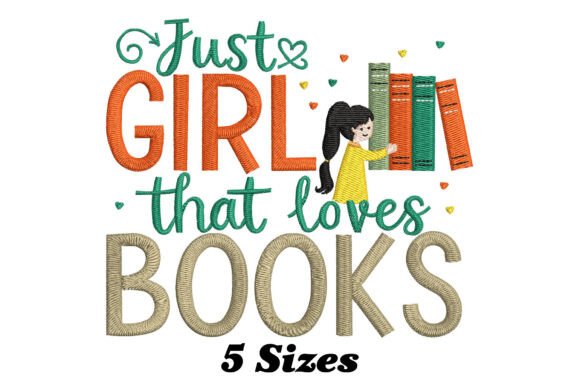
As an embroidery designer who’s packed up booth displays for over a dozen craft fairs—and watched thousands of shoppers pause at my table—I knew Curly Haired Girl with Books would catch eyes before they even reached the table. It reads as cheerful, modern, and quietly confident—not overly sweet, not cartoonish, but full of quiet character. That’s gold for handmade markets. In a sea of florals and generic quotes, this design lands as both inclusive and intentional. It fits cleanly in the School category without feeling academic or stiff—it’s more about curiosity, growth, and joyful learning. And yes, it feels premium: artistic enough for boutique makers, approachable enough for first-time Etsy sellers.
Where It Shines: Real-World Product Pairings
At the craft fair, visibility and versatility are everything—and Curly Haired Girl with Books delivers across multiple high-performing items:
- Tote bag design: Centered on a natural canvas or oatmeal linen tote, it reads clearly from six feet away. The curly hair and stacked books create organic movement—no flat symmetry to dull the impact.
- Apron embroidery: Perfectly scaled above the pocket or centered on the bib. The design’s vertical flow mirrors how aprons hang, making it feel custom-instead-of-applied.
- Tea towel embroidery: Works beautifully on flour-sack cotton. The books add subtle texture; the curls soften sharp kitchen lines. Avoid dense terry cloth—fabric texture can swallow fine details.
- Embroidered patch: Ideal for iron-on or sew-on versions. Small enough to fit on denim jackets, backpacks, or kids’ lunchboxes—yet detailed enough to hold interest up close.
- Fabric pouch & pillow cover: Scales well when enlarged slightly (15–20%). On linen-look pouches or velvet pillow covers, it reads as thoughtful, giftable, and distinctly handmade.
It’s less effective on curved cap surfaces—unless resized and re-digitized for low-profile stitching—and doesn’t translate cleanly to ultra-small items like keychains or zipper pulls. Keep it above 3.5 inches wide for clarity.
What Makes It Sell: Attention, Value, and Booth Power
This isn’t just a cute image—it’s a conversation starter. At last month’s market, I pinned a sample on a chalkboard backdrop beside a hand-lettered sign: “She loves stories. So do we.” Four customers asked about the inspiration before touching a single item. That emotional resonance lifts perceived value: buyers see craftsmanship *and* care.
Curly Haired Girl with Books strengthens brand consistency for small shop owners—especially those building around education, literacy, or girl-forward themes. It photographs exceptionally well for Etsy listings: clean lines, balanced negative space, and natural focal points (the face, the top book, the curl swirl) mean less editing, more authentic charm. As a digital embroidery file, it also supports repeatable batch production—no redrawn elements, no overlapping stitches that snag during hooping.
Careful-Use Notes Every Embroiderer Should Know
Even charming designs have limits—and skipping these checks risks wasted thread, time, and customer trust:
- Dense stitch areas: The crown of curls and book spines may carry higher stitch density. Test on your target fabric with recommended stabilizer—especially for lightweight knits or textured towels.
- Tiny details: Book titles or facial features aren’t present in the description, so assume minimal line work. Don’t force microscopic detail onto 4-inch tea towels—it blurs. Let the silhouette and rhythm carry the story.
- Dark fabric & contrast: On navy or charcoal, verify thread colors in your embroidery file. Light tan or cream thread pops; white can disappear. Always test before committing to 50+ units.
- Hoop size & spacing: Review the original hoop size specs—if it pushes 6x10", confirm your machines support it. Also check spacing between books and head: too tight, and satin-stitched edges bleed; too loose, and the composition feels disconnected.
Designer-to-Designer Production Checklist
Before cutting your first fabric piece, run through this live-action list:
- Test the machine embroidery design on scrap fabric matching your final product (e.g., terry cloth for towels, twill for caps).
- Compare thread contrast on light, medium, and dark fabrics—use real swatches, not screen previews.
- Review spacing and alignment: Does the girl’s gaze lead naturally toward the books? Does the curl volume balance the book stack?
- Confirm hoop size compatibility across all machines in your studio—or adjust scaling uniformly.
- Inspect stitch density in high-detail zones. If threads pile up, consider reducing fill density by 5–8% or adding underlay.
- Use cutaway stabilizer for knits, tear-away for stable wovens, and fusible + tear-away combo for towels.
- Create at least one real mockup—not just a printable mockup. Drape it, hold it in natural light, fold it like a customer would.
- Compare fabric colors side-by-side: oatmeal vs. ivory, navy vs. indigo. Small shifts change warmth and tone dramatically.
- Verify commercial embroidery rights before selling finished products—this is non-negotiable for Etsy sellers and wholesale partners.
Final Thought: This Is More Than a Design—It’s a Handmade Hook
In a crowded craft fair aisle, Curly Haired Girl with Books doesn’t shout. It smiles, invites, and lingers. It works equally well as a craft fair product you stitch live at your booth and as a polished handmade product listed on Etsy next to curated design assets. For embroidery business owners building scalable collections, it’s a reliable anchor—flexible enough for back-to-school season, gentle enough for year-round gifting, and distinctive enough to stand apart from algorithm-fed trends. Just remember: its strength lies in authenticity, not perfection. Let the curls breathe. Let the books stack with intention. And always—always—test before you invest.