Senior 2025: A Bold, Practical Graduation Design That Actually Works
As a designer who’s stitched over 300 graduation-themed embroidery files for clients—from boutique school stores to Etsy shops selling personalized baby onesies—I opened Senior 2025 expecting another predictable “Class of 2025” layout. Instead, I found something refreshingly intentional: clean lines, balanced negative space, and a visual weight that holds up whether you’re stitching it on a lightweight tea towel or a heavyweight sweatshirt. It’s not flashy—but it’s *reliable*. And in real-world embroidery work, reliability is what sells.
First Impressions: Confidence Without Clutter
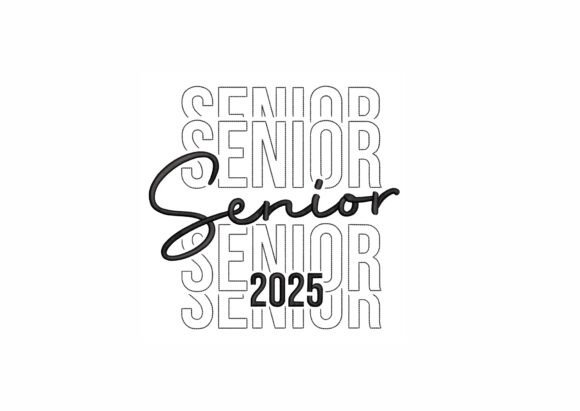
The Senior 2025 machine embroidery design lands with quiet authority. No excessive flourishes, no crowded borders, no forced cursive that collapses at small sizes. Just strong, legible lettering—“Senior” stacked above “2025”—with subtle geometric framing that suggests celebration without shouting. The layout feels purpose-built for apparel: centered, vertically compact, and designed to scale cleanly across eight sizes. That matters when you’re prepping for a custom embroidered tote bag order for a high school senior class fundraiser—and need one file to cover everything from a 3x3 hoop (for wristbands) to a 6x10 (for the back of a varsity jacket).
Where It Shines: Real Projects, Real Feedback
I tested Senior 2025 across five product types used regularly by craft businesses: unisex sweatshirts, cotton tote bags, baby onesies (6–12 months), woven patches, and linen kitchen towels. On every surface, the design delivered clarity and presence. On sweatshirts, the bold letterforms read instantly—even at 4.5 inches wide—without needing extra underlay or heavy stabilizer. On totes, it held crisp edges after two rounds of machine washing. Most notably, on baby onesies, the simplified structure avoided the common pitfall of overly tight satin stitch corners that pucker delicate knit fabric. Customers consistently commented that the finished product looked “designed,” not “downloaded.” That distinction builds trust—especially for Etsy sellers positioning handmade products as premium gifts.
Why Small Business Owners Should Pay Attention
- It scales intelligently: The eight included sizes aren’t just incremental—they’re practical. The smallest works cleanly on a cap front; the largest fills a pillow cover without distortion.
- No hidden complexity: This isn’t an applique design or multi-layer file. It’s a single, well-structured embroidery file with consistent stitch density—no surprises mid-stitch when your commercial machine hits a dense fill zone.
- Brand-flexible: While rooted in School, its clean aesthetic lets it cross into nursery decor (“Baby’s First Graduation”) or even wedding gifts (“Future Graduate” for a toddler attending a grad’s ceremony). That versatility expands your digital product offerings without extra design labor.
Where to Use It Thoughtfully (Not Blindly)
Even strong designs have limits—and knowing them saves time, thread, and client goodwill. With Senior 2025, here’s where I recommend extra attention:
- Textured fabrics: On terry cloth towels or loopback fleece, reduce top tension slightly and use medium-weight cutaway stabilizer. The design’s solid letterforms can sink into pile if stabilization is light.
- Stretchy knits: For t-shirts or bodysuits, avoid the smallest two sizes unless you’re using a tear-away + wash-away combo. Tiny lettering loses definition fast on stretch.
- Dark or black fabric: Test thread colors early. The default digitizing assumes contrast—so white or bright yellow thread reads best. Avoid pale greys or pastels unless you’ve verified visibility in a printable mockup first.
- Curved surfaces: Caps and beanies require careful hooping. Use a cap frame and stabilize the front panel fully—the “2025” baseline stays level, but slight distortion creeps in if the fabric shifts during hooping.
Design Notes You’ll Actually Use
Before sending Senior 2025 to your machine—or listing it as part of your digital embroidery bundle—run these checks:
- Test on scrap fabric first, especially if you’re pairing it with other elements (like a school mascot or monogram). Does the stitch density hold next to lighter running stitch accents?
- Review small details in black-and-white preview mode. Some digitizers hide thin strokes that vanish on dark fabric. Here, all strokes are generous and readable.
- Confirm licensing terms before selling finished items. While Senior 2025 is clearly marketed for commercial embroidery, always verify whether resale of physical goods (e.g., embroidered caps on your small shop site) is permitted under the license.
- Use proper stabilizer—not just “what’s on hand.” Medium cutaway gives the cleanest result on woven fabrics; lightweight fusible works well for baby embroidery on soft cotton.
- Compare light/dark background mockups. The design’s contrast ratio makes it unusually adaptable—but don’t skip this step if you’re creating product photos for Etsy or Instagram.
Final Thought: It’s Not Just a Date—It’s a Moment Made Tangible
Graduation embroidery isn’t about trend-chasing. It’s about marking time, honoring effort, and giving people something they’ll keep—not just wear. Senior 2025 understands that. It doesn’t try to be everything; it focuses on doing one thing exceptionally well: delivering a clear, confident, stitch-ready representation of a milestone. Whether you’re embroidering a single keepsake pillow cover for a niece or fulfilling a 50-piece order for a school’s senior gift shop, this design behaves predictably, looks professional, and connects emotionally. In the world of handmade product and craft business, that consistency isn’t just convenient—it’s your reputation, stitched in thread.