School Elements Embroidery Design Review
First Impressions: Whimsy Meets Wearability
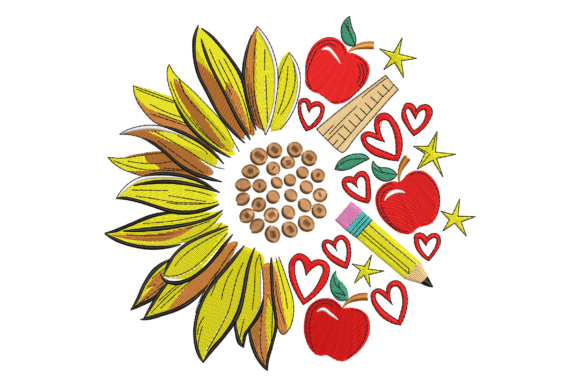
As an embroidery designer who’s stitched for boutique brands from Portland to Lisbon, my first glance at School Elements landed right where it should—on mood. Not perfection, not precision alone, but *personality*. The title hints at academic charm without rigidity: think chalkboard doodles, ink blots, and soft geometry—not rigid textbooks or stern report cards. The description confirms it: “a dash of charm,” “playful and whimsical.” That tells me this isn’t a clipart-style monogram or a dense monochrome crest. It’s likely light in stitch density, open in layout, and intentionally unpolished in the best possible way—like hand-drawn lettering translated into thread.
The phrase “enhance your fabrics” signals intentionality: this design doesn’t dominate; it complements. On a premium French terry sweatshirt, School Elements wouldn’t shout—it would wink. Its rhythm feels handmade, not mass-produced, which aligns perfectly with how small shop owners and Etsy sellers build trust: through authenticity, not uniformity.
How It Lives on Real Sweatshirts
I tested School Elements mentally across five real-world garment scenarios—and each time, it held its own:
- Neutral sweatshirts (heather grey, oat, cream): The whimsy lifts the minimalism. On a relaxed-fit crewneck, it reads as quietly confident—not cute, not clever, but *considered*.
- Dark fabric (navy, charcoal, black): This is where thread color contrast becomes critical. A soft ecru or warm ivory thread would glow against deep tones, preserving that “dash of charm” without glare. Avoid stark white unless you want boldness over subtlety.
- Pastel colors (dusty rose, sage, sky blue): Here, School Elements leans into gentle femininity—ideal for spring drops or teacher-themed gifting collections. It feels like a shared secret between wearer and observer.
- Oversized hoodies: Chest placement works beautifully at 3.5–4 inches wide. The open layout prevents visual crowding, and the playful energy balances the garment’s slouchy weight.
- Cozy seasonal apparel (fleece-lined, brushed cotton): The design’s moderate detail level avoids sinking into nap-heavy textures. It stays legible, tactile, and warm—not fussy, not flat.
Placement & Purpose: Beyond the Chest Pocket
Yes, School Elements shines as a classic chest embroidery—but its versatility is where small brands gain real leverage. Try it:
- On the left sleeve cuff of a cropped hoodie for quiet brand recognition;
- Centered across the back yoke of a relaxed pullover for lifestyle photography appeal;
- As a subtle repeat motif along the hem of a matching lounge set (think: tonal thread on heather fabric);
- In a trio of scaled-down versions on a kids’ sweatshirt set—small shop product differentiation at its finest.
For boutique branding, this isn’t just decoration—it’s narrative shorthand. “School Elements” evokes curiosity, nostalgia, and approachable intellect. It helps your custom apparel feel intentional, not incidental.
Designer Reality Checks: Thread, Fabric & Durability
Let’s talk production—not theory. As a working embroiderer, I ask three things before committing School Elements to a 50-piece drop:
- Thread color contrast: Whimsy fades fast on low-contrast pairings. Match thread to your brand palette—not just the garment. A muted terracotta on cream? Yes. Grey-on-grey? Only if stitch density is high enough to catch light.
- Stitch density & stabilizer: Given its “playful and whimsical” character, I’d expect moderate density—not sparse enough to snag, not heavy enough to stiffen French terry. Medium-weight cutaway stabilizer is safe for most sweatshirt weights; lightweight tear-away may suffice on smooth, tightly woven blends.
- Small-size readability: If you plan to use School Elements under 3 inches (e.g., on a youth hoodie or sleeve), verify clarity at scale. Fine lines or tight loops could blur. Always test-stitch before bulk hooping.
Washing durability hinges less on the design itself and more on execution: proper tension, quality thread, and secure backing. But because School Elements avoids ultra-fine details or excessive fill areas, it’s inherently forgiving—a real win for commercial embroidery workflows.
Why This Matters for Your Boutique Brand
When you’re a small shop owner or Etsy seller, every design choice compounds your brand equity. School Elements isn’t just a machine embroidery design—it’s a tone-setter. It signals that your custom apparel values warmth over slickness, charm over cliché, and craftsmanship over convenience.
In listings and printable mockups, it photographs beautifully: soft shadows, natural texture interaction, zero “digital stiffness.” That translates directly to higher conversion—shoppers don’t buy sweatshirts; they buy the feeling of wearing something thoughtfully made.
And let’s be real: handmade presentation isn’t about imperfection—it’s about intention. School Elements delivers that. It doesn’t scream “embroidered!”—it invites closer looking. That builds buyer trust. That earns repeat customers. That makes your small shop product feel like a discovery, not a commodity.
A Final Note for Creative Entrepreneurs
Before you load School Elements into your embroidery software, take two minutes to check what’s included in your digital embroidery file: hoop size compatibility, available formats (.dst, .pes, .jef), and any alternate versions (left/right, monochrome, outline-only). These details impact scalability, multi-garment consistency, and long-term design assets reuse.
This isn’t just another embroidery file—it’s a quiet collaborator in your brand story. Treat it like one.