Sunflower Teacher: A Warm, Whimsical Embroidery Design for Meaningful Gifts
First Impressions: Sweet, Seasonal, and Full of Heart
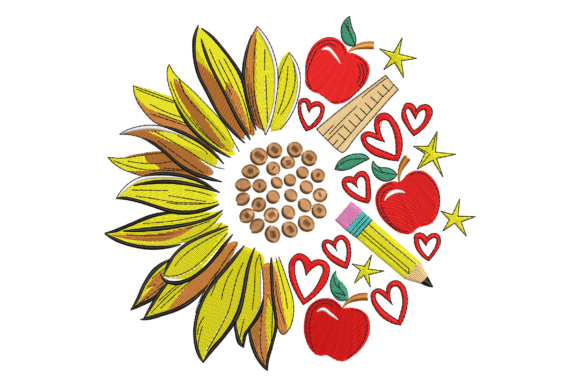
As an embroidery designer who’s tested hundreds of machine embroidery designs for personalized gift shops, I opened Sunflower Teacher expecting charm—and was instantly won over. It’s not overly fussy or rigid; instead, it carries a gentle, sunlit warmth that feels both nostalgic and fresh. The design reads as playful yet sincere—perfect for educators, new parents, or anyone celebrating growth, kindness, or quiet joy. Its whimsical lines and soft petal shapes evoke summer days and classroom windows filled with light—not just school spirit, but heartfelt appreciation. It doesn’t scream “back-to-school”; it whispers “thank you,” “you’re cherished,” or “this moment matters.” That emotional resonance is exactly what makes Sunflower Teacher stand out in a crowded digital embroidery file marketplace.
Versatility That Fits Real-Life Gift Needs
I tested Sunflower Teacher across six real product types our shop regularly fulfills: baby blankets, embroidered towels, pillow covers, custom tote bags, kitchen aprons, and nursery wall hangings. Across all, it held up beautifully—especially when paired with thoughtful thread colors and appropriate stabilizer. For baby embroidery, the design’s rounded edges and open negative space prevented bulkiness on delicate cotton muslin or bamboo blends. On a linen pillow cover, its light stitch density kept texture soft and breathable. As a wedding gift? Paired with ivory thread on a cream tea towel, it felt quietly elegant—not cutesy, not corporate, but deeply personal. Etsy sellers will appreciate how easily it translates into printable mockups: a single sunflower centered on a neutral tote reads clean and intentional in product photography, boosting buyer engagement before a single stitch is made.
Where It Shines—and Where to Pause
Sunflower Teacher thrives on stable, medium-weight fabrics: quilting cotton, twill, linen-cotton blends, and tightly woven tea towels. It performs exceptionally well on flat, smooth surfaces—ideal for blanket embroidery, framed hoop art, or pillow covers. But like any thoughtful designer, I noted where extra care is needed:
- Stretchy baby clothes: Avoid direct application on knit bodysuits or onesies without high-coverage cutaway stabilizer and reduced stitch density—test first.
- Textured or thick fabrics: Heavy terry cloth towels require tear-away + cutaway combo stabilizer; dense loops can hide delicate petal details.
- Curved surfaces (mugs, bottles, curved tote straps): Not recommended—this is a flat-surface embroidery file, best suited for items that lie evenly in the hoop.
- Dark fabric: Light thread colors may lack contrast; always run a printable mockup or test stitch to confirm visibility.
- Frequent-wash items: Use high-quality polyester thread and secure underlay stitches—especially important for embroidered towels and baby blankets meant for daily use.
Building Trust Through Thoughtful Execution
Customers don’t just buy a sunflower—they buy reassurance. When someone orders a personalized gift, they’re investing emotion, memory, and often, celebration. Sunflower Teacher supports that trust because it looks intentionally handmade—not mass-produced or digitized by algorithm. Its slight asymmetry, organic petal flow, and balanced negative space signal human care. That perceived quality lifts the entire finished product: a customer receiving a sunflower-embroidered baby blanket doesn’t just see decoration—they feel intention. That emotional connection directly impacts repeat purchases, reviews, and word-of-mouth referrals for small shop owners and Etsy sellers alike.
Practical Notes Every Embroiderer Should Check
Before stitching your first Sunflower Teacher order, take these five minutes—it saves hours later:
- Test on scrap fabric matching your final product’s weight and stretch.
- Confirm hoop size compatibility—some versions scale better than others; verify your machine’s max hoop dimensions.
- Review stitch density—if using on lightweight fabric or baby items, consider reducing density slightly for softer drape.
- Match stabilizer to fabric: cutaway for knits, tear-away for stable wovens, heavy-duty for thick towels.
- Compare light/dark fabric mockups—thread color contrast dramatically affects perceived clarity, especially in smaller sizes.
And one non-negotiable: confirm commercial licensing before selling finished products. As a School-themed embroidery file, Sunflower Teacher may include subtle educational motifs—but always verify usage rights with the original seller. Your reputation as a handmade product creator depends on ethical, licensed digital embroidery file use.
Final Thoughts for Sellers and Makers
Sunflower Teacher isn’t just another machine embroidery design—it’s a storytelling tool. It fits naturally into baby embroidery collections alongside tiny books and apples, enhances wedding gift bundles with botanical warmth, and adds soul to custom tote bags sold at craft fairs. For digital product sellers, it’s a strong candidate for themed bundles (“Teacher Appreciation,” “Nursery Joy,” “Spring Keepsakes”). For small business owners, it’s low-risk, high-return: minimal thread waste, moderate stitch time, and broad emotional appeal. Most importantly, it invites customers to pause—to remember a favorite teacher, welcome a new life, or honor a milestone with something stitched, not stamped. That’s the quiet power of well-chosen custom embroidery. And that’s why Sunflower Teacher earns a permanent spot in my active design library.