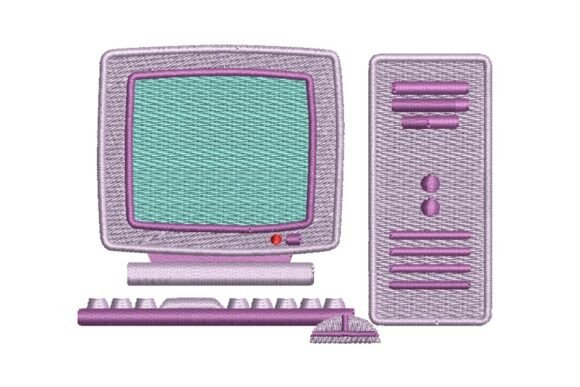
Retro Computer
A Nostalgic Spark for Holiday & Seasonal Collections
As an embroidery designer who’s built dozens of seasonal product lines—from back-to-school launches to Christmas gift drops—I opened Retro Computer with immediate recognition: this isn’t just another tech motif. It’s a warm, pastel-toned time capsule. The vintage desktop silhouette—rounded edges, soft keyboard keys, subtle screen glow—is rendered with gentle curves and balanced negative space. It feels playful, not clinical; cozy, not kitschy. There’s no aggressive pixelation or harsh outlines—just clean, confident stitching that leans into 90s nostalgia without irony. For holiday shoppers, it taps into shared memory: family computer corners, early internet days, first email accounts. That emotional resonance is gold for handmade gifts.
Where Retro Computer Shines in Real Holiday Selling
This machine embroidery design thrives where authenticity and charm meet utility. On sweatshirt embroidery, it lands perfectly at chest or sleeve—big enough to read, small enough to layer under scarves or jackets. As a tote bag design, it adds geek-chic credibility to grocery runs or school drop-offs (fitting its School category without feeling academic). For kitchen towel embroidery, the pastel palette reads crisp against linen or cotton—no visual fatigue after repeated use. On pillow covers or aprons, it softens tech themes into approachable home decor. And as an embroidered patch, it’s ideal for holiday gift bundles: stitch it onto denim jackets, backpacks, or even baby onesies for “future coder” charm.
Etsy sellers will love how Retro Computer performs in listings. Its distinct mood—nostalgic yet fresh—stands out in crowded “geek gift” search results. Pair it with printable mockups showing it on matching family sweatshirts or holiday table linens, and you’ve got scroll-stopping visual storytelling. At craft fairs, it draws smiles—not just from Gen X buyers, but millennials gifting to parents and teens styling their own rooms. For limited-edition apparel drops, it pairs beautifully with coordinating fonts or minimalist circuit motifs. And because it’s inherently personalizable (“Add your child’s name below the monitor!”), it boosts average order value as a personalized gift.
Use With Care: Practical Limits for Seasonal Production
While Retro Computer is versatile, its charm depends on thoughtful execution. Avoid cramming it into tiny hoop sizes—details like the keyboard texture or monitor bezel need breathing room. If stitching on thick, looped kitchen towel embroidery fabric, test stabilizer layers first; too little causes puckering, too much dulls the pastel thread pop. On dark fabric, verify that light thread colors (like mint or buttercream) have enough contrast—don’t assume brightness translates across substrates. Metallic thread? Skip it here. The design’s softness relies on matte, even coverage—not shimmer. And on stretchy garments (think ribbed knit holiday sweaters), use cutaway + tear-away stabilizer combo to prevent distortion during wear and wash.
Also note: curved surfaces like baseball caps require re-digitizing or careful placement—Retro Computer wasn’t built for crown curvature. And while it works on baby items, avoid dense fill areas near seams where repeated washing could stress stitches. Always check stitch density before bulk production—holiday timelines leave no room for rehooping failures.
How Retro Computer Elevates Seasonal Appeal & Trust
Holiday shoppers don’t just buy designs—they buy feelings, stories, and reassurance. Retro Computer delivers all three. Its nostalgic warmth makes tech feel human, not intimidating—ideal for handmade gift shoppers seeking meaning over mass production. Visually, it’s instantly recognizable: no decoding needed. That clarity builds customer trust, especially for new Etsy shops building brand consistency. When customers see Retro Computer on a pillow cover, then a tote, then an apron—they recognize your shop’s curated voice. That recognition fuels repeat purchases and social shares (“Look what I got from [Shop Name]!”).
It also lifts perceived product value. A plain pastel sweatshirt becomes a conversation starter. A basic kitchen towel transforms into a collectible. That emotional lift directly impacts giftability: people choose items they’re proud to wrap and present. And during high-intent holiday browsing, that extra second of engagement—“Oh, my first computer!”—is where carts get filled.
Designer Notes You Can’t Skip Before Launching
- Test thread colors on both light and dark fabric—pastels behave differently on oatmeal vs. charcoal.
- Confirm hoop size compatibility before listing—some versions may exceed standard 4x4" hoops.
- Use proper stabilizer for each fabric type: tear-away for stable cottons, cutaway for knits, fusible for lightweight linens.
- Create realistic mockups—not just white backgrounds. Show it on a holiday-lit shelf, draped over a gift-wrapped box, or pinned to a craft fair banner.
- Review small details after stitching: ensure keyboard key definition stays crisp, and monitor “glow” doesn’t blur into background.
- Plan matching color palettes across products—e.g., mint thread on cream towels, lavender on heather-gray sweatshirts.
- Confirm commercial licensing before selling finished seasonal products—this is non-negotiable for Etsy sellers and small shop owners.
Bottom line? Retro Computer isn’t just a digital embroidery file. It’s a seasonal anchor—a design that bridges generations, balances trend and timelessness, and turns everyday items into heartfelt personalized gift moments. Used intentionally, it earns shelf space in holiday homes, craft fair booths, and Etsy wishlists alike. Just remember: great seasonal embroidery starts with respect for the stitch, the fabric, and the person unwrapping it.